
There’s a question that comes up in nearly every hormone therapy consultation — and it almost always comes with a sigh: “Why didn’t I look into this sooner?” It’s asked by people who spent months, sometimes years, quietly assuming that exhaustion was just stress, that mood changes were just life, and that their body was simply getting older in the way bodies do. What they didn’t know — what so many people don’t know — is that what they were experiencing wasn’t inevitable. It was a hormone imbalance, and it was treatable.
Why Hormone Conversations Happen Too Late
Hormones regulate nearly every major system in the body. They influence how you sleep, how you feel emotionally, how your metabolism functions, how your skin ages, and how clearly you think. When hormone levels begin to shift — whether due to age, stress, lifestyle, or underlying health factors — the effects are rarely sudden. They creep in gradually, overlapping with the rhythms of everyday life in ways that make them easy to dismiss.
Fatigue becomes “just being busy.” Brain fog becomes “just getting older.” Low libido becomes something quietly accepted rather than addressed. By the time someone connects these symptoms to a potential hormone imbalance treatment, months or years may have passed with a significantly reduced quality of life.
This is the question everyone asks too late: Could hormone therapy have helped me sooner? In most cases, the answer is yes — and the good news is that it’s never too late to start the conversation.

What Is Hormone Therapy?
Hormone replacement therapy is a clinically guided approach to restoring hormone levels that have dropped below the range needed for optimal function. It’s not about turning back the clock arbitrarily — it’s about returning the body to a state where it can perform the way it’s meant to.
There are different forms of hormone therapy, and the right approach depends on individual lab work, symptoms, age, health history, and goals. A qualified provider doesn’t use a generic protocol — they build a plan around your specific hormonal profile.
Bioidentical Hormone Therapy: A Closer Look
One of the most widely discussed approaches today is bioidentical hormone therapy. Unlike synthetic hormones, bioidentical hormones are molecularly identical to the hormones the body naturally produces — including estrogen, progesterone, and testosterone. Because of this structural match, they interact with the body’s receptors in a way that closely mimics natural hormone activity.
Bioidentical hormones can be delivered in several forms: topical creams, oral capsules, injections, or subcutaneous pellets. Pellet therapy, in particular, has grown in popularity because it releases hormones steadily over time, avoiding the fluctuations that can come with other delivery methods. For both men and women, bioidentical protocols are typically personalized based on ongoing lab monitoring rather than a one-size-fits-all dose.
Who Benefits From Hormone Optimization?
Hormone optimization isn’t just a women’s health topic — and it isn’t only relevant at a certain age. While perimenopause and menopause are among the most common reasons women seek evaluation, hormonal decline can occur at any stage of adulthood. Men experience a gradual decline in testosterone beginning as early as their 30s, a process sometimes called andropause, that can significantly affect vitality, mental clarity, and physical performance.
Common signs that a hormonal health evaluation may be worth pursuing include:
- Persistent fatigue that doesn’t improve with rest or lifestyle changes
- Mood instability, including increased anxiety, irritability, or low mood without a clear cause
- Weight gain, particularly in the midsection, that doesn’t respond to diet and exercise
- Cognitive changes such as memory lapses, difficulty concentrating, or a sense of mental cloudiness
- Disrupted sleep, including difficulty falling asleep, staying asleep, or waking feeling unrested
- Reduced libido or changes in sexual function
- Hair thinning or changes in skin texture and tone
- Decreased muscle mass or strength, even with consistent exercise
If several of these sound familiar, they don’t have to be your normal.
Testosterone Therapy: Not Just for Men
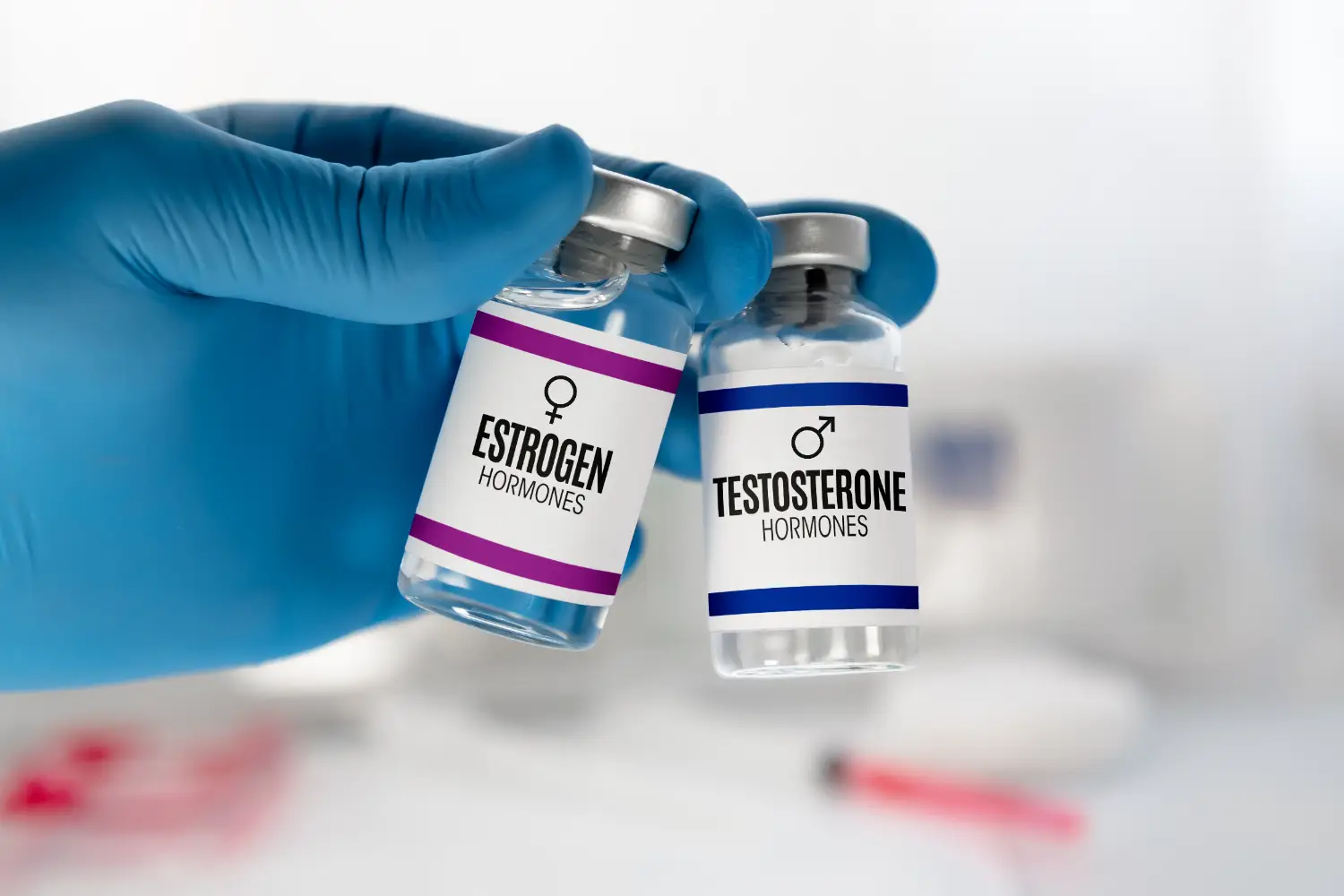
Testosterone therapy is most commonly associated with men, but testosterone plays a critical role in women’s health as well. In women, testosterone contributes to energy, libido, muscle tone, bone density, and cognitive sharpness. When it declines — which can happen during perimenopause, after surgical menopause, or even in younger women due to other factors — the effects can be just as pronounced as they are in men.
For men, low testosterone (clinically referred to as hypogonadism or low-T) can manifest as loss of drive, increased body fat, reduced muscle definition, depression, and significant drops in sexual function. When testosterone is restored to an optimal range through carefully monitored therapy, many men report dramatic improvements in energy, mood, physical performance, and overall sense of wellbeing.
What the Evaluation Process Looks Like
Starting hormone replacement therapy begins with a thorough consultation and comprehensive lab work. Bloodwork identifies current hormone levels — including estrogen, progesterone, testosterone, DHEA, thyroid hormones, and others — so a provider can see exactly where imbalances exist and how significant they are.
From there, a personalized treatment plan is developed. The goal isn’t simply to normalize a number on a lab report; it’s to find the level at which you feel your best. Follow-up testing is an essential part of the process, ensuring that doses are adjusted as needed and that the body is responding well to treatment.
Starting Sooner vs. Waiting
One of the most important things to understand about hormonal health is that earlier intervention typically produces better outcomes. Prolonged hormonal imbalance isn’t just uncomfortable — it can have cumulative effects on bone density, cardiovascular health, cognitive function, and metabolic efficiency. Addressing deficiencies before they compound over time means a more straightforward path to restoration.
That said, it’s never too late. People who begin hormone therapy in their 50s, 60s, and beyond still report meaningful improvements in quality of life. The body responds to optimization at any age — the earlier you begin, the more you preserve. But wherever you are right now is a valid starting point.
The Conversation Worth Having
If you’ve been quietly tolerating symptoms that don’t quite have an explanation — or if you’ve been told your labs are “normal” but you still don’t feel like yourself — hormone therapy may be the conversation you’ve been putting off. At Square One Aesthetics & Wellness we provide a proper evaluation takes a complete picture of your health, your symptoms, and your goals rather than relying on standard reference ranges alone. The question isn’t whether hormones matter. They do — profoundly. The better question is: how long are you willing to wait to find out what’s actually going on? Schedule a consultation today and start getting real answers.